Project leader:
Assistant Professor Ivan Jeličić (University of Rijeka, Faculty of Humanities and Social Sciences, Department of Italian Studies)
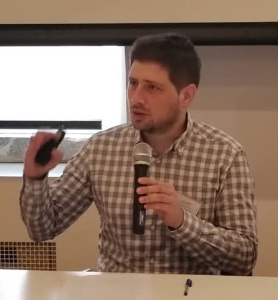
Assistant Professor Ivan Jeličić was a postdoc at the European Research Council (ERC) project “NEPOSTRANS: Negotiating post-imperial transitions” at the Institute of Political History in Budapest. He collaborated on the project Rijeka in Flux: Borders and Urban Change after World War II, an international interdisciplinary project at the University of British Columbia, Okanagan. He has published his work, among else, in Acta Histrae, Austrian History Yearbook, Contemporary European History, Historijski zbornik, Histria, Südost-Forschungen, The Journal of Modern History (co-authored with Dominique Kirchner Reill and Francesco Rolandi). Coeditor (with Corinna Gerbaz Giuliano, Julia Lozzi Barković and Andrea Roknić Bežanić) of the Conference Proceedings Rijeka Identity: Economic, Historical, Linguistic and Cultural Echoes on the Occasion of the 150th Anniversary of the Construction of the Rijeka – Pivka and Rijeka – Karlovac Railways, Faculty of Humanities and Social Sciences in Rijeka, 2025.
In his research, he deals with the political, social, and cultural history of Fiume/Rijeka and its surroundings in the late 19th and early 20th centuries. His current research focus is are the politics of memory in the first post-war period about the First World War and the establishment of the fascist regime in the northern Adriatic area.
Email: ivan.jelicic@uniri.hr
Collaborators:
Assistant Professor Mihovil Dabo (University of Juraj Dobrila in Pula, Faculty of Humanities and Social Sciences, Department of History)
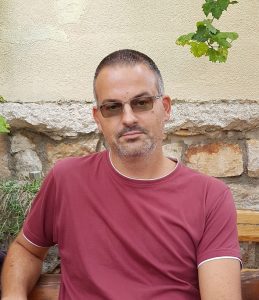 Assistant Professor Mihovil Dabo is author of the monograph Sve za Boga, vjeru i puk. Biskup Juraj Dobrila u svom vremenu (All for God, faith and the people. Bishop Juraj Dobrila in his time), State Archives in Pazin, 2015, co-editor with Milan Radošević, U sjeni Velikoga rata. Odraz ratnih zbivanja na život istarskoga civilnog stanovništva (In the Shadow of the Great War. The Reflection of War Events on the Life of the Istrian Civilian Population), Istrian Historical Society, 2019 and co-editor with Nevio Šetić, Naša sloga 1870.-1915. Novine hrvatskoga preporodnoga i nacionalno-integracijskoga procesa u Istri i na kvarnerskim otocima. Izbor iz građe (Naèa Sloga 1870-1915. Journal of the Croatian National Revival and National-Integration Process in Istria and on the Kvarner Islands. Selection of Sources), Faculty of Humanities and Social Sciences in Pula, 2020. He participated in the bilateral, Slovenian-Croatian project On the Margins of the Great War: Cultural and Educational Features in Rijeka, Pula, Ljubljana, and Gorizia 1914-1918 (2016-2017, leaders PhD Milan Radošević and PhD Petra Svoljšak). He is member of the Direction Board of the Istrian Historical Society and the editor-in-chief of the annual Histria.
In his scientific work, he focuses on the processes of political and social modernization of the population of Istria during the 19th and 20th centuries.
Email: mihovil.dabo@unipu.hr
Diego Han, researcher/doctoral student (Centre for Historical Research – Rovigno-Rovinj / University of Zagreb, Faculty of Philosophy, Department of History)
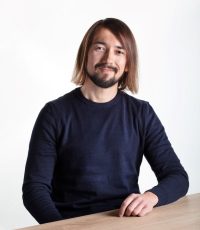 Diego Han, researcher at the Centre for Historical Research in Rovigno-Rovinj, regularly publishes in the journal Quaderni, where he has published several works on Istria and Rovigno/Rovinj in the first post-war period. In 2020, he was the editor of issue 26 of the journal Ricerche sociali, he is a member of the Editorial board of the journal Ricerca and the editorial series Etnia, and a member of the Centre’s Administrative Council. Diego Han is a doctoral student in the Doctoral study program of Modern and Contemporary Croatian History in European and World Contexts and a member of the Istrian Historical Society.
He researches Istrian interwar history, with an emphasis on the processes of fascistization of society and everyday life during the period of fascism. His special focus is the city of Rovigno/Rovinj and local, microhistorical approach to the analysis of social, cultural and political changes of that period.
Email: han@crsrv.org
Full Professor Mila Orlić ((University of Rijeka, Faculty of Humanities and Social Sciences, Department of History)
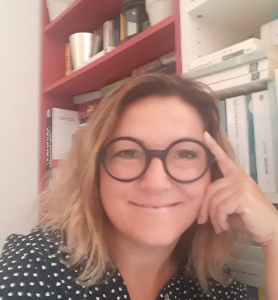 Full Professor Mila Orlić is the author of the monograph Identità di confine. Storia dell’Istria e degli istriani dal 1943 a oggi (Border Identities. History of Istria and the Istrians from 1943 to the present), Viella, 2024. She has published numerous studies on the Istrian exodus. She is a member of the Slovenian-Croatian bilateral scientific research project ARIS-HRZZ “Mnemonic Aesthetics and Strategies in Popular Culture: Murals, Film, and Popular Music as Memory Work” – MEMPOP.
Her scientific work focuses on border studies (transitions, migrations, diasporas, forced displacements and minority issues) in multicultural regions of eastern and central Europe, the history of Yugoslavia and its successor states (intellectuals and the Yugoslav political crisis), and popular culture in the public sphere.
Email: milaorlic@ffri.uniri.hr
PhD Monica Priante, Lector (University of Split, Faculty of Philosophy, Department of Italian Language and Literature)
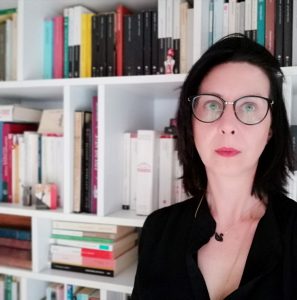 PhD Monica Priante is co-author with Slavko Slišković of the monograph Tondini i Strossmayer. Jedinstveni za jedinstvo (Tondini and Strossmayer. United for Unity), Kršćanska sadašnjost, 2016. After her doctorate, she collaborated with several Croatian Universities and the Italian Institute of Culture in Zagreb. She has published several articles on aspects of cultural thanatology with a special focus on the culture of death at the turn of the 19th and 20th centuries. From 2020 to 2023, she was a collaborator on the scientific research project “The First World War in the Culture of Memory. Forgotten Heritage” (Croatian Science Foundation/HRZZ IP-2019-04-5897).
In her scientific work, she is currently researching monuments dedicated to Italian soldiers who fell in World War I in Pola/Pula, primarily the memorial ossuary of fallen Italian soldiers within the naval cemetery.
PhD Milan Radošević, Senior Research Associate (Institute for Historical and Social Sciences of the Croatian Academy of Sciences and Arts in Rijeka, Regional Unit in Pula)
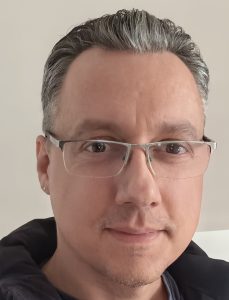 PhD Milan Radošević is the author of above a hundred scientific and professional papers, including a monograph on post-war fascist violence in Pula Geneza antifašizma u Istri. Fašističko nasilje spram radničkog i hrvatskog nacionalnog pokreta na Puljštini 1920., (The genesis of antifascism in Istria. Fascist violence against the workers’ and Croatian national movement in the Pula region in 1920) Srednja Europa, 2022. He was the principal investigator of the scientific and research project “A Century of European Antifascism. Istria between Local and Global” (2017–2023) and of the bilateral project “On the Margins of the Great War: Cultural and Educational Aspects in Rijeka, Pula, Ljubljana and Gorizia 1914-1918”, cooperation of the Institute of the Croatian Academy of Sciences and Arts in Rijeka with the Regional Unit in Pula with the Milko Kos Historical Institute of the Scientific and Research Center of the Slovenian Academy of Sciences and Arts (2016–2017). He is the author of the concept and exhibition of the Joakim Rakovac Memorial House. He is member of the presidency of the Association of Anti-Fascist Fighters and Anti-Fascists of the City of Pula. He is the initiator, first secretary (2010–2014), vice-president (2017–2021) and until recently president (2021–2024) of the Istrian Historical Society. He leads the project “Digitalization of Historiographic Literature”.
The current focus of his scientific work is the figure of Vladimir Gortan and the anti-fascist movement in Istria in the interwar period.
Email: mrados@hazu.hr